The Best Tires for Your Xterra
OEM tire sizes for both Xterra generations plus top picks: Michelin Defender LTX (highway), BFG KO2 and Falken Wildpeak A/T3W (all-terrain), KM3 (mud).

the Best Tires for Your Nissan Xterra
The Nissan Xterra is a legendary SUV, celebrated for its rugged, no-nonsense approach to adventure. Whether you're navigating city streets, hauling gear for a weekend camping trip, or tackling challenging off-road trails, the right set of tires is crucial to unlocking your Xterra's full potential. Choosing the wrong rubber can lead to poor performance, a noisy ride, and even compromised safety. This is more than just a purchase; it's an investment in your vehicle's capability and your driving experience.
Finding the perfect match can feel overwhelming with countless options ranging from quiet highway tourers to aggressive mud-terrain monsters. How do you know which tire size fits? What's the difference between an all-terrain and a mud-terrain tire in real-world use? And what modifications are needed if you want to run bigger, more capable tires?
This comprehensive guide will answer all those questions and more. We'll break down the original equipment (OEM) specs for every Xterra generation, dive into the top tire picks for every driving style, and walk you through the world of upsizing, lifts, and modifications. By the end, you'll have the confidence and knowledge to choose the absolute best tires for your Nissan Xterra.
Understanding Your Xterra: OEM Tire & Wheel Specs
Before you can upgrade, you need to know your starting point. Nissan used different wheel and tire configurations between the first and second generations of the Xterra, with the most critical difference being the bolt pattern. This means wheels are not interchangeable between the two generations without adapters. Knowing your specific model's original specs is the foundation for any successful tire upgrade.
First Generation (2000–2004)
The first-gen Xterra (model code WD22) is known for its classic, truck-like platform. These models consistently used a 6x5.5″ (139.7 mm) bolt pattern, a common size shared with many other trucks and SUVs of the era.
- Base/XE Trims: These models typically rolled on 15-inch wheels. Early models often came with 265/75R15 tires, while later base trims used 265/70R15 or even a narrower 235/70R15 tire.
- Off-Road/SE/Sport Trims: Higher-end trims were equipped with larger 16x7″ wheels shod in 265/70R16 tires.
- Late Model SE/Supercharged: The most well-equipped models, especially the supercharged versions from 2002-2004, received stylish 17x7″ wheels with 265/65R17 tires.
Second Generation (2005–2015)
The second-gen Xterra (model code N50) was a complete redesign, and that included the wheel specs. It switched to a 6x4.5″ (114.3 mm) bolt pattern, which is important to remember when shopping for aftermarket wheels.
- XE/S/X Trims: The most common trims came standard with 16x7″ wheels and versatile 265/70R16 all-terrain tires.
- Off-Road/Pro-4X Trims: Built for the trail from the factory, these rugged models featured a slightly larger 265/75R16 tire on the same 16x7″ wheels. This taller tire provided a bit of extra ground clearance right off the showroom floor.
- SE Trim: For a short period, a more street-focused SE trim was offered with 17x7″ wheels and 265/65R17 tires, similar to the late first-gen models.
| Specification | First Generation (2000–2004) | Second Generation (2005–2015) |
|---|---|---|
| Bolt Pattern | 6x5.5″ (139.7 mm) | 6x4.5″ (114.3 mm) |
| Center Bore | 100.3 mm | 66.1 mm |
| Lug Nut Torque | ~101 ft-lb | ~101 ft-lb |
| Common Sizes | 265/75R15, 265/70R16, 265/65R17 | 265/70R16, 265/75R16, 265/65R17 |
The Best Tires for Nissan Xterra: Top Picks by Category
With a solid understanding of your Xterra's stock setup, it's time to explore the best replacement options. We've categorized our top picks based on the most common driving needs, from daily commuting to extreme off-roading. Each tire represents a fantastic balance of performance, durability, and value in its class.
Best for Daily Driving (Highway & All-Season)
If your Xterra is primarily a daily driver, commuter, or family hauler, your priorities are comfort, low road noise, and long tread life. These highway and all-season tires deliver a smooth, quiet ride without sacrificing safety and wet-weather performance.
- Michelin Defender LTX M/S: Often considered the gold standard for light truck and SUV highway tires.
- Pros: Exceptional tread life (up to 80,000-mile warranty), whisper-quiet ride, outstanding performance in wet and dry conditions.
- Cons: Higher price point, not intended for serious off-road use.
- Bridgestone Alenza A/S Ultra: A premium touring tire designed for luxury-level comfort.
- Pros: Engineered for an incredibly smooth and quiet ride, excellent braking stability, and a high treadwear rating (UTQG 700).
- Cons: Limited traction in mud or on rocky trails.
- General Grabber HTS60: A fantastic value proposition that doesn't skimp on performance.
- Pros: Budget-friendly, good all-season traction, M+S rating for light snow, and a comfortable ride.
- Cons: Not as long-lasting as premium competitors.
Best All-Terrain Tires with Severe Snow Rating (3PMSF)
For the Xterra owner who does it all, a versatile all-terrain (AT) tire is the perfect choice. These modern ATs offer a brilliant compromise, providing excellent on-road manners while being tough enough for weekend adventures. Crucially, every tire in this category is 3-Peak Mountain Snowflake (3PMSF) rated, meaning they are certified for severe snow conditions.
- BFGoodrich All-Terrain T/A KO2: An icon in the off-road world for a reason.
- Pros: Legendary toughness with CoreGard sidewall technology, aggressive looks, and fantastic traction in dirt, mud, and snow.
- Cons: Can be noisy on the highway, slightly harsher ride than less aggressive ATs.
- Falken Wildpeak A/T3W: A fan favorite known for its incredible performance-to-price ratio.
- Pros: Excellent wet and snow traction thanks to a silica-based tread compound, surprisingly quiet for its capability, and very durable.
- Cons: Can be heavier than some competitors, which may slightly impact MPG.
- Toyo Open Country A/T III: A modern all-terrain that excels in nearly every condition.
- Pros: 3PMSF rated, aggressive tread pattern for off-road grip, and a reputation for long, even wear.
- Cons: Can be difficult to find in stock due to high demand.
Best Aggressive All-Terrain Tires
Sometimes called "hybrid" tires, these options bridge the gap between all-terrain and mud-terrain tires. They feature large, voided tread blocks for off-road bite but incorporate design elements like siping and variable pitch patterns to maintain reasonable on-road behavior.
- Nitto Ridge Grappler: The tire that arguably defined the hybrid category.
- Pros: Aggressive mud-terrain looks with better-than-MT road manners, good performance in a wide variety of off-road conditions.
- Cons: Softer tread compound (UTQG 500) means faster wear than a traditional AT.
- Cooper Discoverer AT3 XLT: Built for heavy-duty use, with a focus on durability and traction.
- Pros: Extremely durable construction, large tread blocks for clearing mud and gravel, and often 3PMSF rated.
- Cons: Can be on the heavier and noisier side of the AT spectrum.
- Goodyear Wrangler Duratrac: A legendary tire that performs like an aggressive AT but has the heart of a mud tire.
- Pros: Excellent in mud and snow (3PMSF rated), self-cleaning TractiveGroove Technology, and surprisingly capable on-road.
- Cons: Sidewalls are perceived by some as less durable than competitors like the KO2.
Best Mud-Terrain (MT) Tires for Maximum Off-Road Grip
When your adventures take you through deep mud, slick rocks, and the most challenging terrain imaginable, only a dedicated mud-terrain tire will do. These tires sacrifice on-road comfort, noise, and tread life for one thing: uncompromising off-road traction.
Mud-terrain tires are a specialized tool. Their large, open tread blocks are designed to dig into soft surfaces and eject mud and rocks, providing grip where other tires would spin helplessly. Be prepared for significant road noise and faster wear on pavement.
- BFGoodrich Mud-Terrain T/A KM3: The undisputed king of mud and rock crawling.
- Pros: Phenomenal traction in the harshest conditions, rock-solid sidewall protection, and impressive durability.
- Cons: Very loud on the highway, rough ride, and expensive.
- Cooper Discoverer STT Pro: An incredibly tough tire built for the most demanding users.
- Pros: Armor Tek3 construction for puncture resistance, large voids for mud evacuation, and a bold, aggressive look.
- Cons: Extremely noisy on pavement and wears quickly with daily driving.
- Toyo Open Country M/T: A long-standing favorite known for its toughness and performance.
- Pros: Deep, aggressive tread pattern, excellent self-cleaning capabilities, and a reputation for being nearly indestructible.
- Cons: One of the heaviest and loudest options available.
Upsizing Your Xterra's Tires: A Fitment & Modification Guide
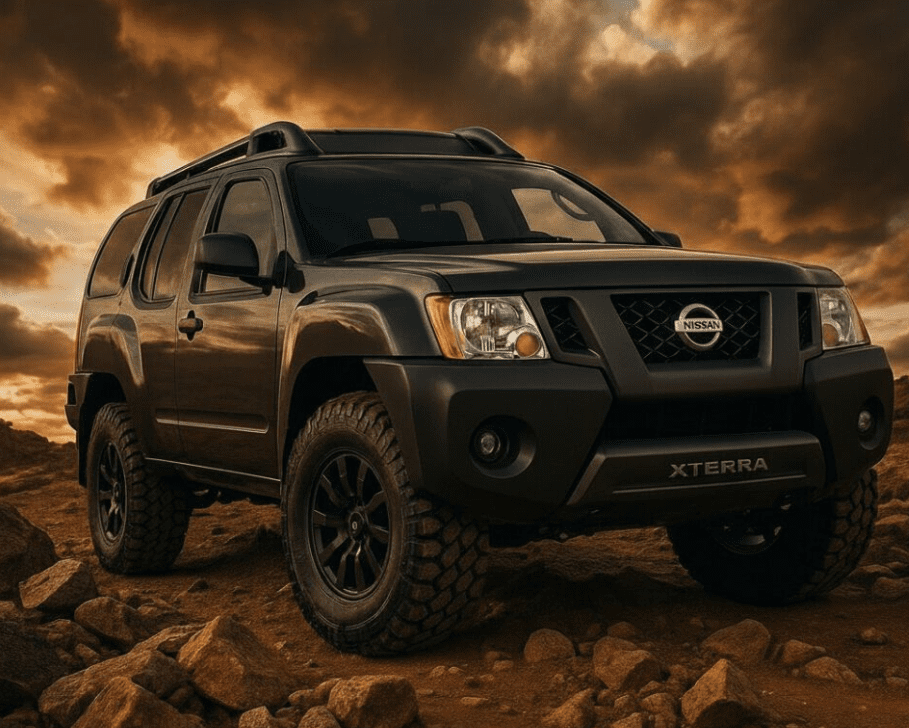
One of the most popular modifications for any Xterra is fitting larger tires. Bigger rubber provides more ground clearance, a larger contact patch for better traction, and an aggressive, purposeful stance. However, fitting them correctly requires careful planning to avoid issues like rubbing and component damage.
Common Upsizes and Required Mods
- 265/75R16 (~31.7″): This is the stock size for Pro-4X models and is a fantastic first upgrade for other trims. It typically fits a stock suspension Gen 2 Xterra with little to no modification. At most, you may need to perform the simple "melt mod" - using a heat gun to gently reshape the inner plastic fender liner for a few extra millimeters of clearance at full steering lock.
- 285/75R16 (~33.5″): The coveted "33-inch tire" look. Fitting this size is a bigger commitment. You will almost certainly need a minimum of a 2-inch suspension lift to provide enough vertical clearance. You will also need to perform the melt mod and potentially some minor trimming of the fender liner and mud flaps.
- 265/70R17 (~32.6″): For those with 17-inch wheels, this size offers a nice boost in diameter and falls between the two sizes above in terms of fitment difficulty. A small lift is recommended to avoid any chance of rubbing.
The Role of Wheel Offset
Stock Xterra wheels have a high positive offset (around +30mm), which tucks them deep inside the wheel wells. When you install wider tires, this can cause them to rub on suspension components like the upper control arm. To solve this, many owners switch to aftermarket wheels with a lower offset (from +0mm to +15mm). This pushes the wheel and tire assembly outward, providing better inner clearance.
Performance Impacts of New and Upsized Tires
Changing your tires, especially to a larger size and weight, will have noticeable effects on your Xterra's performance and driving dynamics. It's important to be aware of these trade-offs.
- Speedometer Error: A larger diameter tire travels farther with each rotation than a smaller one. This causes your speedometer to read slower than your actual speed. For example, moving from a stock 30.6" tire to a 33.5" tire can result in a ~9% error - when your speedo shows 60 mph, you're actually traveling closer to 65 mph!
- Gearing & Acceleration: Larger tires effectively change your final drive ratio, making each gear "taller." This can result in slightly sluggish acceleration and may cause your automatic transmission to hunt for gears more often, especially on hills.
- Braking & Fuel Economy: Heavier, larger tires have more rotational mass, which can increase your vehicle's stopping distance. They also increase rolling resistance, which will almost always lead to a decrease in fuel economy. Expect a drop of 1-3 MPG depending on how much larger you go.
Tips & Tricks for Xterra Tire Ownership
Get the most out of your new tires with these essential tips from seasoned Xterra owners.
- Master the "Melt Mod": For minor tire rubbing on the plastic fender liner, a simple heat gun is your best friend. Gently warm the plastic in the problem area until it becomes pliable, then use a blunt object (like the handle of a hammer) to push it inward, creating a permanent pocket for extra tire clearance. It's a simple, free, and effective trick.
- Rotate Aggressively: All-terrain and mud-terrain tires, with their large tread blocks, are more prone to uneven wear. Stick to a strict rotation schedule of every 5,000 miles. A five-tire rotation that includes your full-size spare is the best way to maximize the life of all five tires.
- Check Your TPMS: The batteries inside your Tire Pressure Monitoring System (TPMS) sensors last about 7-10 years. If your Xterra is approaching that age, having the sensors replaced while you're getting new tires installed can save you a significant amount on labor down the road.
- Re-Torque Your Lug Nuts: After installing new wheels or tires, it is critical to re-torque the lug nuts to the factory spec of 101 ft-lbs after driving about 50 miles. Wheels can settle after being mounted, causing the nuts to loosen slightly. This simple step is a crucial safety check.
FAQ - Selecting the best tire for your Xterra
- Q: What are the OEM tire sizes for the Nissan Xterra?
- A: First-gen (2000–2004) uses 15, 16, or 17-inch wheels; second-gen (2005–2015) commonly uses 16 or 17-inch wheels, both with varying tire widths.
- Q: What’s the best tire for daily driving on an Xterra?
- A: Michelin Defender LTX M/S and Bridgestone Alenza A/S Ultra are top highway/all-season picks for comfort, low road noise, and long tread life.
- Q: Which all-terrain tires work best for snow and off-road?
- A: BFGoodrich KO2, Falken Wildpeak A/T3W, and Toyo Open Country A/T III - each 3PMSF-rated for severe snow - with balanced on/off-road capabilities.
- Q: What are “hybrid” aggressive all-terrain tires?
- A: Tires like Nitto Ridge Grappler and Goodyear Duratrac blend mud-terrain looks and off-road bite with decent on-road performance.
- Q: Which tire size fits without modifications?
- A: 265/75R16 usually fits stock Gen 2 Xterras; larger sizes like 285/75R16 need lifts and possibly fender liner modifications.
- Q: What’s the “melt mod” for Xterra tire fitment?
- A: Heating the plastic fender liner and reshaping it for extra tire clearance with minimal effort and no cutting needed.
- Q: Will larger tires affect speedometer accuracy?
- A: Yes, upsizing tires makes your speedometer read slower than actual speed - expect up to a 9% error with 33-inch tires.
- Q: How often should Xterra tires be rotated?
- A: Rotate aggressively every 5,000 miles, ideally including the spare in a five-tire rotation to maximize tread life.
- Q: What’s the ideal lug nut torque for Xterra wheels?
- A: Factory spec is about 101 ft-lbs; always re-torque after 50 miles on new wheels or tires for safety.
- Q: Do I need to replace my Tire Pressure Monitoring Sensors (TPMS) when changing tires?
- A: It’s smart if your sensors are 7–10 years old, as their batteries are likely nearing end of life.
Nissan Xterra Tire Guide
First Generation (2000-2004)
First Gen: Daily Driving
First Gen: All-Terrain Options
• Falken Wildpeak A/T3W
• Toyo Open Country A/T III
All 3PMSF-rated for severe snow conditions
First Gen: Hybrid Aggressive
Second Generation (2005-2015)
Second Gen: Fitment & Modifications
Second Gen: Daily Driving
Universal Maintenance & Safety (Both Generations)
Important Considerations
Conclusion: Hitting the Trail with Confidence
Choosing the right tires for your Nissan Xterra is one of the most impactful upgrades you can make. It transforms not only the look of your rig but also its fundamental character and capability. By understanding your vehicle's factory specifications and honestly assessing your driving needs, you can narrow down the vast market to a few perfect options.
Whether you opt for the quiet comfort of a highway tire like the Michelin Defender LTX M/S for your daily commute or the unstoppable grip of a BFG KM3 for your rock-crawling adventures, the perfect tire is out there. Remember the key takeaways: match the tire to your lifestyle, don't be afraid of minor modifications like the melt mod for a better fit, and always be aware of the performance trade-offs that come with larger, more aggressive rubber.
Your next step is simple. Review the categories we've outlined, pick the tire that best aligns with your adventures, and get ready to experience your Nissan Xterra in a whole new way. Happy trails
Explore our Ultimate DIY Maintenance Guide for Nissan Xterra (2000–2015) to find all the essential tips you need to keep your SUV running at its best.