Xterra 2028 - The King of Off-Road Comes Back
What is known about the 2028 Nissan Xterra comeback: body-on-frame plans, V6 hybrid rumors, Canton production, off-road positioning, and key rivals.

2028 Nissan Xterra - The Legend Returns
*AI Generated image
Why the Xterra is Poised to Redefine the Off-Road Landscape
After a decade of dormancy, the wait is officially over. Nissan has confirmed the return of the iconic Xterra for the 2028 model year, a move sending shockwaves of excitement through the off-road community. This isn't just a comeback; it's a calculated rebirth designed to reclaim Nissan's rightful place in the adventure vehicle segment and serve as a cornerstone for the brand's North American revival.
For years, enthusiasts and dealers alike have clamored for the return of the rugged, body-on-frame SUV that captured hearts with its no-nonsense capability and adventurous spirit. Now, the confirmation from Nissan Americas Chairman, Christian Meunier, has ignited anticipation for a new generation ready to challenge the segment's titans. The dealers are super excited about it because it's going to be a great example of Nissan coming back,” Meunier stated, highlighting the internal and external enthusiasm for the project.
The new Xterra, slated for production at Nissan's Canton, Mississippi facility, promises to be a ground-up redesign, blending its cherished heritage with forward-thinking technology.
A Strategic Pivot: More Than Just Nostalgia
Nissan's decision to resurrect the Xterra is a pivotal element of a broader, product-led revitalization strategy in North America. The brand has announced a massive offensive, planning to launch 20 new and updated models by the spring of 2027, with the Xterra as a crowning achievement in 2028.
This strategic revival comes with a significant shift in plans for the Canton plant. Nissan has frozen its previously announced initiative to build a new all-electric SUV at the facility, reallocating resources to the Xterra. This pragmatic move reflects a keen awareness of the current market, where the demand for rugged, profitable gasoline-powered and hybrid SUVs is robust, while the mass-market EV landscape remains uncertain. “With the market being very uncertain about EVs, I think it's the right thing to do,” Meunier explained in an interview.
By prioritizing the Xterra, Nissan leverages the Canton plant's existing expertise in body-on-frame construction - having previously produced the Titan, Armada, and the second-generation Xterra - to bring a high-demand vehicle to market more efficiently.
The Technical Blueprint: What We Know So Far
While Nissan is keeping specific details under wraps, official confirmations and credible reports have painted a clear picture of what to expect from the 2028 Xterra.
A True Body-on-Frame Foundation
Sticking to its roots, the new Xterra will be built on a true body-on-frame platform, a non-negotiable for off-road purists. Reports from a national dealer meeting confirm this will be an entirely new architecture, designed to be versatile enough to underpin up to five distinct models. This "everything" platform will not only be the foundation for the Xterra but also for the next-generation Frontier pickup. Speculation is rampant that this new platform could also form the basis for future versions of the Pathfinder and the luxurious Infiniti QX60, marking a potential return to a more rugged, truck-based architecture for those models. An Infiniti-branded twin to the Xterra is also reportedly under consideration.
Segment-Exclusive V6 Hybrid Power
Perhaps the most significant news is the confirmation of a V6 hybrid powertrain. This choice strategically differentiates the Xterra from key competitors like the Toyota 4Runner and Ford Bronco, which have moved towards turbocharged four-cylinder hybrid systems. By retaining a V6, Nissan can appeal to buyers who value the smoothness, sound, and proven power delivery of a larger displacement engine.
While the exact hybrid configuration is unknown, some reports suggest it could be a plug-in hybrid (PHEV) system, potentially offering a significant all-electric driving range, a feature that would be a major selling point in the segment.
Design: A Nod to Heritage
Enthusiasts can breathe a sigh of relief. Descriptions from a closed-door dealer meeting suggest a design that honors the original's spirit. Attendees reported seeing a "blocky, adventure-ready design study featuring an upright grille and squarish headlights.” This indicates a deliberate move away from the soft lines of modern crossovers and a return to the purposeful, utilitarian aesthetic that defined the Xterra.
Platform Architecture and Engineering
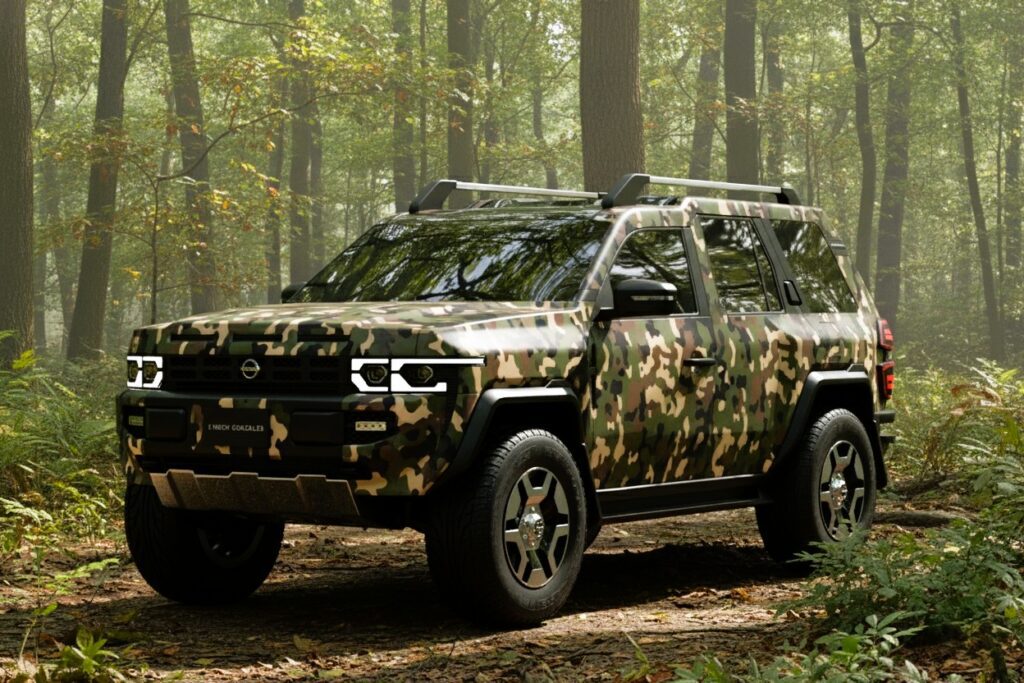
*AI Generated image
Body-on-Frame Construction
The 2028 Xterra will utilize a new body-on-frame platform designed to support five different models, including the updated Frontier pickup, future Pathfinder, and Infiniti QX60. This platform choice represents a return to the Xterra's rugged roots, offering several key advantages:
- Enhanced off-road capability and durability
- Improved towing capacity (expected 5,000+ pounds)
- Superior approach and departure angles for technical terrain
- Robust construction suitable for harsh conditions
Shared Platform Strategy
The platform-sharing approach with the Frontier pickup truck allows Nissan to achieve economies of scale while maintaining the distinctive characteristics that made the original Xterra successful. This strategy mirrors the successful relationship between the previous generation Xterra and Frontier, ensuring proven reliability and cost-effectiveness.
Powertrain and Performance Specifications
Hybrid V6 System
The 2028 Xterra will feature a V6 hybrid powertrain with range-extender capabilities, potentially offering up to 75 miles of electric-only driving. This hybrid system is expected to deliver:
- Estimated 300-330 hp combined output
- 400-450 Nm of torque for superior off-road performance
- Enhanced low-end torque delivery for rock crawling and technical terrain
- Improved fuel efficiency compared to traditional V6 engines
Competitive Positioning
This hybrid approach positions the Xterra as the first V6 hybrid in its segment, differentiating it from competitors like the Toyota 4Runner (which uses a turbocharged four-cylinder hybrid) and providing advantages over the Jeep Wrangler 4xe plug-in system.
Production and Manufacturing
Canton, Mississippi Facility
Production will take place at Nissan's Canton Vehicle Assembly Plant, a 2.8 million square foot facility with capacity for 250,000 vehicles annually. The plant's strategic importance includes:
- Domestic production advantages: Avoiding tariffs and import costs
- Reduced delivery times to North American markets
- Cost optimization through shared production with Frontier pickup
- Employment impact: Supporting approximately 4,000 employees at the facility
The decision to produce the Xterra at Canton represents a strategic shift away from planned EV production at the same facility, as Nissan pauses its electric vehicle manufacturing plans due to market conditions.
The Competitive Gauntlet: Taking on the Icons
The 2028 Xterra is re-entering a fiercely competitive arena, ready to go head-to-head with the Ford Bronco, Jeep Wrangler, and the newly redesigned Toyota 4Runner. Success will require a perfect blend of genuine capability, compelling technology, and smart market positioning.
Its V6 hybrid powertrain will be its primary offensive weapon, offering a unique proposition against the four-cylinder offerings from rivals. To be a true contender, a dedicated high-performance off-road trim, likely reviving the beloved PRO-4X name, is all but guaranteed. This model will need to be equipped with hardware like locking differentials, advanced suspension, and all-terrain tires to challenge the likes of the Bronco Badlands and 4Runner TRD Pro.
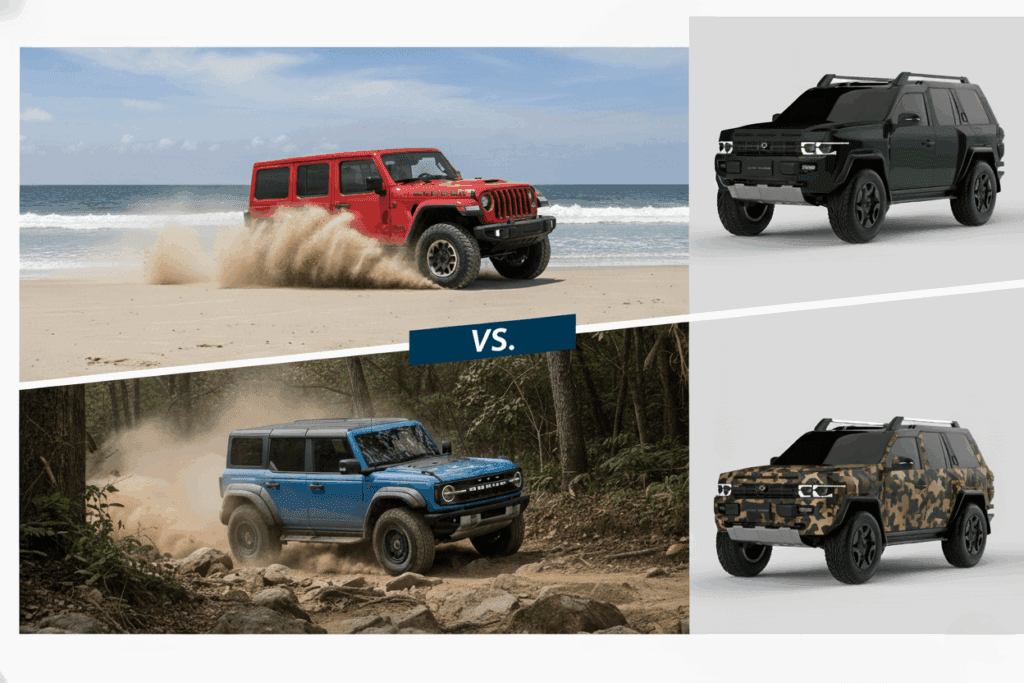
*AI Generated image
Competitive Analysis Matrix (Projected)
| Feature | 2028 Nissan Xterra (Projected) | Ford Bronco | Toyota 4Runner | Jeep Wrangler |
|---|---|---|---|---|
| Platform | Body-on-Frame (New) | Body-on-Frame (T6) | Body-on-Frame (GA-F) | Body-on-Frame |
| Hybrid Option | V6 Plug-in Hybrid (PHEV) | Turbo I4 Hybrid (Expected) | 2.4L Turbo I4 Hybrid | 2.0L Turbo I4 PHEV (4xe) |
| Key Hardware | IFS/Solid Rear Axle (Expected) | IFS/Solid Rear Axle, Disconnects | IFS/Solid Rear Axle, Disconnects | Solid Front & Rear Axles |
| Unique Selling Prop. | V6 Hybrid Power, EV Range | Modular Design, Extreme Variants | Legendary Reliability | Unmatched Rock-Crawling |
A Legacy to Uphold: Remembering the Original
To appreciate the new Xterra's arrival, it's crucial to remember the legacy it inherits.
- First Generation (2000-2004): The original Xterra burst onto the scene as an affordable, no-frills SUV built on the Frontier pickup platform. Its distinctive stepped roofline with an integrated gear basket and its marketing tagline, "Everything you need, nothing you don't," perfectly captured its essence. It quickly became a cult classic among young, active buyers.
- Second Generation (2005-2015): The second generation grew in size and power, moving to the more substantial F-Alpha platform and gaining the potent 4.0L V6 engine. The PRO-4X trim solidified its reputation as a serious off-road machine.
- Discontinuation (2015): A combination of declining sales in a crossover-dominated market, poor fuel economy, and the high cost of meeting new safety and emissions standards led to the Xterra's discontinuation after the 2015 model year.
The Road Ahead: Critical Factors for Success
The 2028 Nissan Xterra is more than just a new vehicle; it's a symbol of a brand's ambition. Its success will hinge on several key factors:
- Authenticity: It must be a genuinely capable, body-on-frame off-roader that lives up to the legend of its predecessors.
- Powertrain Excellence: The V6 hybrid must deliver a clear advantage in performance, refinement, and real-world efficiency.
- Competitive Pricing: It must offer a compelling value proposition to lure buyers away from the established competition.
If Nissan can deliver on these fronts, the Xterra won't just be a successful model; it will be a halo vehicle that re-energizes the brand, excites its dealer network, and carves out a significant piece of the lucrative adventure vehicle market. For the legions of fans who have waited patiently, the countdown to 2028 has officially begun.