Best Replacement Parts & Upgrades for Xterra: Full Guide
Top replacement parts and upgrades for every Nissan Xterra (2000-2015): radiator, brakes, suspension, electrical, tires, drivetrain, and a phased roadmap.

The Ultimate Nissan Xterra Upgrades & Performance Guide
The Nissan Xterra, a famously rugged 4x4 SUV, is a prime candidate for meaningful upgrades. Whether you're behind the wheel of a classic 2001 model or a late-model 2015 Pro-4X, strategic modifications can fortify its known weak points and unlock significant performance gains, both on and off the pavement. This comprehensive guide will walk you through the best replacement parts to ensure your Xterra's reliability, as well as the top upgrades for boosting power, off-road prowess, and overlanding capabilities. We'll weigh the cost versus benefit of each modification, offering trusted advice to help you invest your money wisely. Let's dive in and get ready to wrench, upgrade, and conquer.
Why Trust This Guide?
The internet is flooded with advice, but not all of it is reliable. This guide was written and curated based on over a decade of combined experience wrenching on, driving, and wheeling Nissan Xterras. We've spent countless hours in the garage, on the trail, and in online communities, learning the hard lessons so you don't have to. We've seen the catastrophic results of SMOD firsthand and felt the game-changing difference of a well-tuned suspension.
This isn't just a list of parts; it's a roadmap built on real-world Experience, Expertise, and a commitment to the Xterra community's Trust.
Top Nissan Xterra Upgrade Guides
Explore the best upgrades, maintenance, and performance tips for your Nissan Xterra:
Essential OEM-Style Replacement Parts
Before chasing horsepower or bigger tires, a smart owner builds on a solid foundation. These aren't just suggestions; they are crucial fixes and replacements that address the Xterra's well-documented weak points, ensuring your rig is reliable enough for future mods and adventures.
To keep your Nissan Xterra running strong, addressing common wear items and known vulnerabilities is the first order of business. High-quality OEM or aftermarket replacements for critical components in the engine, cooling system, brakes, suspension, and drivetrain will not only restore reliability but can also offer a performance boost. Here’s a system-by-system breakdown of key parts Xterra owners should consider refreshing or upgrading.
Engine & Ignition Components: Reliability First
While the Xterra's engines are known for their durability, certain parts require attention as part of preventative maintenance.
- Timing Components: For 2000–2004 (WD22) models with the 3.3L V6, the timing belt is a critical component that must be replaced approximately every 100,000 miles to prevent catastrophic engine failure. The 2005–2015 (N50) Xterra's 4.0L V6 uses a timing chain, but models from 2005 to 2010 are known for their plastic timing chain tensioner guides, which can wear out and produce a distinctive whining sound. If you hear this, it's crucial to install an updated timing chain kit to prevent severe engine damage. While labor-intensive, this is a vital fix for long-term reliability.
- Ignition System: A fresh set of NGK or Denso OEM-spec spark plugs and new ignition coils (if you're experiencing misfires) can breathe new life into your engine, restoring lost power and improving fuel economy. The V6 engines in these trucks perform best with OEM-style platinum or iridium plugs gapped to the recommended specification.
- Sensors: Proactively replacing the camshaft and crankshaft position sensors on higher-mileage Xterras is a smart move. These sensors are known to fail, leading to no-start or stalling issues. They are inexpensive and can save you the headache of being stranded.
Cooling System: Radiator & Hoses (Your #1 Priority on a 2nd Gen)
A robust cooling system is paramount, especially for off-roading or towing.
For owners of second-generation Xterras (2005–2010), the radiator is a critical point of concern. A design defect can lead to a catastrophic failure known as the "Strawberry Milkshake of Death" (SMOD), where coolant and transmission fluid mix. This can destroy your transmission.
- Prevention: The best preventative measure is to replace the stock radiator with a high-quality aftermarket unit or Nissan's revised part. An all-aluminum radiator from a brand like Koyorad is a premium choice for enhanced cooling and durability, while a quality OEM-style replacement from Spectra Premium is a more budget-friendly option. This relatively inexpensive upgrade is cheap insurance against a costly transmission rebuild.
- Further Protection: While you're at it, replace old radiator and heater hoses, which can become brittle and crack. For those in hot climates or who tow frequently, adding an external transmission cooler or performing a radiator bypass are also wise modifications.
Brakes: Pads, Rotors & Lines (Stopping Power for a Heavy Rig)
Confident stopping power is just as important as engine performance, especially when you've added the weight of larger tires or other accessories.
- Pads and Rotors: Upgrading to high-friction brake pads and quality rotors is a must. Many Xterra owners opt for ceramic or performance semi-metallic pads, such as the PowerStop Z36 Truck & Tow or EBC Yellowstuff, paired with slotted or drilled rotors for improved heat dissipation. These are typically direct-fit replacements that significantly enhance braking performance.
- Brake Lines: On older Xterras, replacing the stock rubber brake hoses with stainless steel braided lines can provide a firmer, more responsive pedal feel.
- Big Brake Kits: While a full "big brake kit" with larger calipers is an option, it's often more than what's needed for the average user. A quality set of pads and rotors, combined with a fresh fluid bleed, will provide a substantial improvement in braking performance.
Suspension: Shocks & Springs (Shocks, Springs & a New Lease on Life)
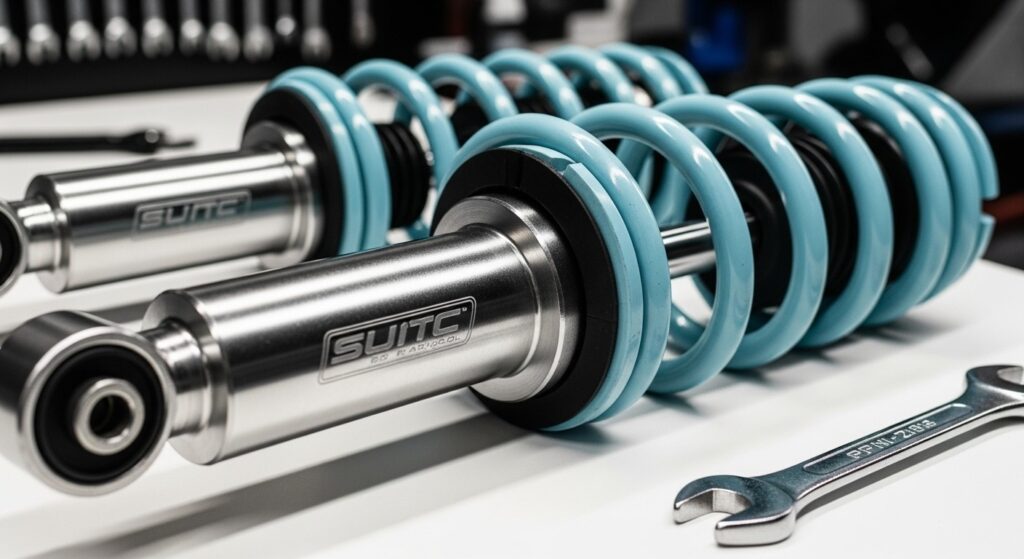
Years of use can take a toll on your Xterra's suspension, leading to a sagging or harsh ride.
- Shocks and Struts: Replacing worn shocks and struts with quality aftermarket units is one of the most effective ways to improve ride and handling.
- OEM-Style Upgrade: Bilstein 4600 series shocks are a popular choice for restoring a firm, controlled ride without adding lift.
- Lift and Performance: For those seeking a bit of lift and better off-road capability, Bilstein 5100 shocks offer adjustable front ride height and pair well with an Add-A-Leaf or a new leaf pack in the rear.
- First-Generation (WD22) Specifics: These models often experience sagging rear leaf springs. Replacing or re-arching them, or using an add-a-leaf kit, can restore ride height and load capacity. The front torsion bars can be adjusted for a small lift (a "poor man's lift"), but be aware that old torsion bars can weaken. Upgraded torsion bars from brands like Sway-A-Way are a potential solution for a sagging front end.
- Bushings: Replacing worn suspension bushings, such as control arm bushings and sway bar links, can tighten up your Xterra's handling.
Drivetrain & Driveline
The Xterra's drivetrain is generally robust, but some components can benefit from an upgrade, especially with increased performance.
- Manual Transmission: If you have a manual, a heavy-duty clutch kit from a brand like Exedy or Centerforce is a smart upgrade when the stock clutch wears out, particularly if you've added larger tires or plan to tow.
- Automatic Transmission: Regular ATF fluid changes are crucial. After addressing the radiator, an external transmission cooler is a great addition for extra protection during demanding use.
- Driveshaft and Differentials: Worn U-joints can cause clunks or vibrations; replacing them with greasable, heavy-duty units is a simple and effective fix. For serious off-roaders, upgrading to a locking differential, like an ARB Air Locker, can provide true four-wheel-drive traction. Extended differential breathers are an inexpensive and highly recommended modification to prevent water from entering the differentials during water crossings. The front differential on second-generation models (the R180) can be a weak point with larger tires and heavy off-road use.
- First-Generation (WD22) Hubs: Owners of first-gen Xterras can replace the stock automatic locking hubs with more durable manual locking hubs from brands like WARN.
Electrical & Lighting
A reliable electrical system is the backbone of any modified vehicle.
- Battery: If you're adding accessories like a winch, auxiliary lighting, or a refrigerator, upgrading to a high-performance AGM battery (such as an Optima YellowTop or Odyssey) is a must to ensure you have reliable starting power and sufficient reserve capacity.
- Alternator: For those with significant electrical demands, a high-output alternator is a worthwhile investment. The stock alternator can be replaced with a more powerful unit to better support a winch or a large audio system.
- Lighting: Swapping out dim, cloudy stock headlights with LED assemblies or high-quality bulbs can dramatically improve nighttime visibility and safety.
Performance Upgrades for Every Driving Style
With a reliable foundation, it's time for the fun stuff. These upgrades are tailored to how you use your Xterra.
Whether you're looking to enhance your daily commute, conquer challenging trails, or embark on extended overland adventures, there are specific upgrades tailored to your needs.
Daily Driving Performance Upgrades
While the Xterra isn't a sports car, a few key upgrades can make your daily drive more responsive and enjoyable.
- Intake and Exhaust: A cold air intake (CAI) from a reputable brand like Volant or K&N can improve throttle response and add a satisfying engine growl. A cat-back exhaust system from manufacturers like Gibson or Flowmaster can further enhance performance by reducing exhaust restriction.
- ECU Tuning: An engine performance tuner or a custom ECU flash, such as one from UpRev, can optimize your engine's performance by refining throttle sensitivity and adjusting fuel and timing maps. This can lead to noticeable improvements in acceleration and drivability.
- Suspension and Tires: Quality shocks, like the Bilstein models mentioned earlier, can reduce body roll and improve on-road handling. A good set of all-terrain tires can provide a comfortable ride on pavement while still offering capable performance for weekend off-road excursions.
Off-Road Trail Upgrades
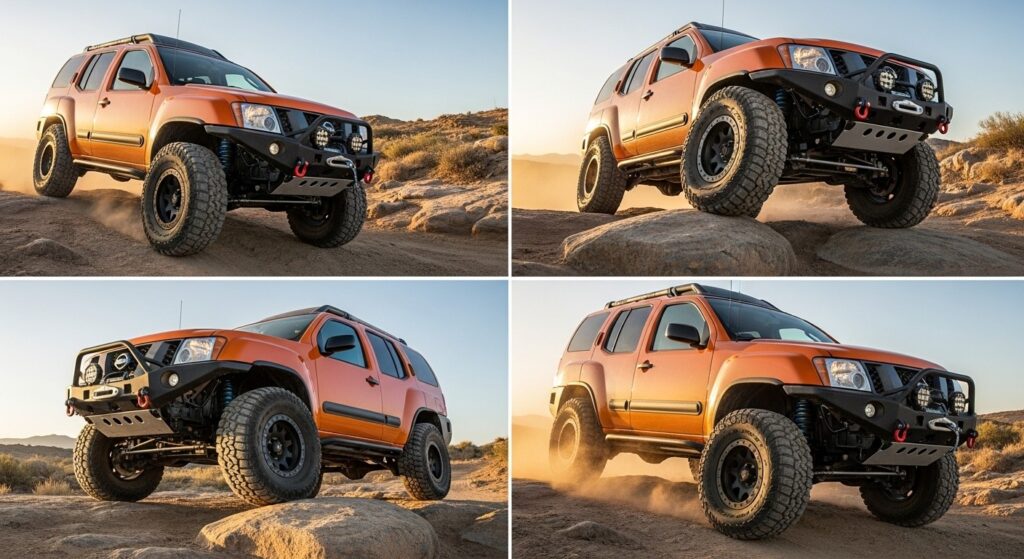
For those who want to push their Xterra to its limits on the trail, these upgrades are essential.
- Suspension Lift Kits: A 2-3 inch lift provides crucial ground clearance and improved approach and departure angles.
- Budget-Friendly: A spacer lift for the front and shackles or an add-a-leaf for the rear is an affordable way to fit larger tires.
- Full Suspension Kits: For serious off-roading, a complete kit with new coilovers, upper control arms, and leaf packs from brands like Old Man Emu or more advanced options from Radflo or Icon will provide superior articulation and ride quality.
- Titan Swap: For the ultimate in off-road performance, the "Titan Swap" involves retrofitting front suspension components from a Nissan Titan. This provides a significant lift and a substantial increase in wheel travel.
- Tires and Wheels: Aggressive all-terrain or mud-terrain tires are a must for off-road traction. Popular choices include the BFGoodrich KO2 and Goodyear Duratrac. Larger tires also increase ground clearance.
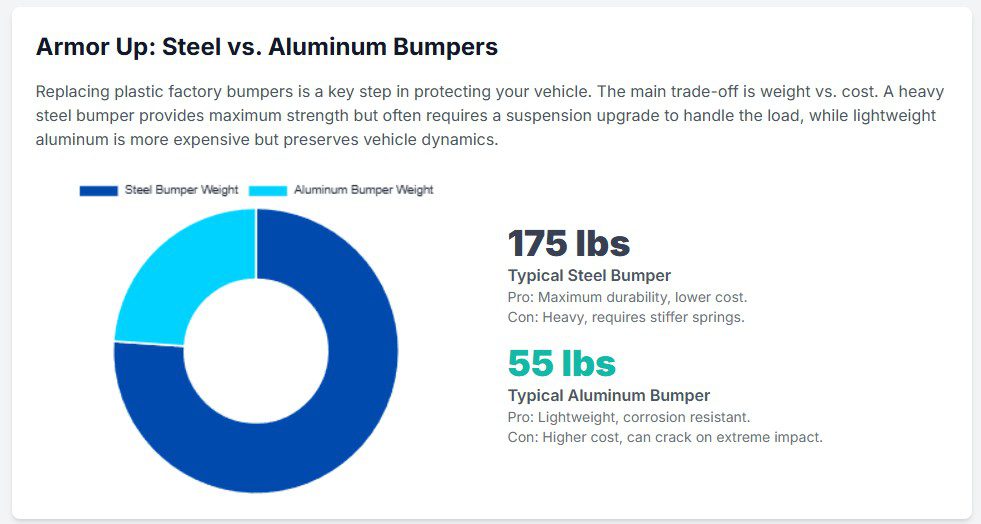
- Armor: To protect your investment, skid plates for the engine and transmission, rock sliders for the rocker panels, and steel bumpers are crucial. A front winch bumper from a company like Shrockworks or ARB not only offers protection but also a mounting point for a life-saving winch.
- Locking Differentials: If your Xterra didn't come with a factory rear locker, adding an aftermarket one, like an ARB Air Locker, will provide a massive boost in traction on challenging terrain.
Overlanding & Adventure Upgrades
For self-reliant, long-distance travel, the focus shifts to endurance, storage, and self-sufficiency.
- Cargo Management: A robust aftermarket roof rack from a brand like Front Runner is essential for mounting a rooftop tent, extra fuel, and other gear.
- Electrical System: A dual-battery setup is a popular and wise choice for powering a refrigerator, camp lights, and other accessories without draining your starting battery. An upgraded high-output alternator is also recommended for these builds.
- Storage and Organization: Drawer systems in the cargo area help keep tools, recovery gear, and other essentials organized and easily accessible.
- On-Board Air: An on-board air compressor is a valuable addition for airing down tires for improved off-road traction and airing them back up for the highway.
Compatibility Guide: Know Your Generation
The first-generation Xterra (WD22, 2000–2004) and the second-generation (N50, 2005–2015) are significantly different vehicles. It's crucial to select parts and upgrades that are compatible with your specific model year.
- First-Generation (WD22): This generation features a 3.3L V6 engine and a torsion bar front suspension. Most performance and suspension parts are not interchangeable with the second generation.
- Second-Generation (N50): The N50 came with a more powerful 4.0L V6 and a coilover front suspension. This generation has a wider array of available aftermarket upgrades.
Note: While most components are generation-specific, some universal items like wheels (both generations use a 6x5.5" bolt pattern), lights, and winches can be used on either model. Always double-check fitment before purchasing.
DIY vs. Professional Installation
Many Xterra upgrades are DIY-friendly, but the difficulty can vary.
- Beginner-Friendly: Swapping an air filter, installing a bolt-on intake, changing spark plugs, or installing LED light pods can typically be done with basic hand tools.
- Intermediate: Suspension work like installing a spacer lift, changing shocks and struts, or upgrading brakes requires more mechanical know-how and specialized tools like jack stands and a torque wrench. Replacing the radiator is also an intermediate-level task.
- Advanced: A Titan swap, re-gearing differentials, or installing a clutch are more complex jobs that may be best left to experienced DIYers or professionals.
Choosing Your Path: Budget vs. Premium Upgrades
Not every build needs top-dollar parts. A smart approach is often a mix: spend where it matters most for your usage (e.g., quality suspension for off-roading, a reliable radiator) and go budget on things that are less critical or easily upgraded later.
| Upgrade Area | Budget Option (Approx. Cost) | Premium Option (Approx. Cost) |
| Suspension Lift | 2″ spacer & shackle lift kit (~$200). Pros: Cheap, easy. Cons: No performance gain. | 2–3″ full suspension kit w/ coilovers & leaf springs (~1000–1000–1500). Pros: Superior ride & travel. Cons: Higher cost. |
| Intake & Exhaust | Drop-in performance air filter (50)+muffler−onlyswap(50)+muffler−onlyswap(150). Pros: Better sound, minimal cost. | Volant cold air intake (300)+Cat−backexhaustsystem(300)+Cat−backexhaustsystem(500). Pros: Better airflow, quality materials. |
| Lighting | 22″ LED light bar (generic brand) (~$80). Pros: Lots of light for the price. Cons: Unknown longevity/durability. | Pair of 6″ premium LED driving lights (e.g., Baja Designs, $400+). Pros: Extreme brightness, rugged build, warranty. |
| Front Bumper | DIY welded bumper or used OEM bull bar (~$300). Pros: Budget-friendly. Cons: Heavy, unverified design. | Shrockworks or ARB steel winch bumper (~$1200+). Pros: Engineered fit, crash-tested, integrates winch/lights. |
Maintenance and Warranty Considerations
- Maintenance First: Before embarking on major modifications, ensure your Xterra is in good mechanical condition. Address any underlying issues first.
- Warranty: While most Xterras are now out of their factory warranty, if you have an extended warranty, be aware of how modifications might affect coverage. The Magnuson-Moss Warranty Act protects consumers from having their warranties voided simply for using aftermarket parts, but a manufacturer can deny a claim if they can prove the aftermarket part caused the failure.
The Fine Print: Maintenance & Warranty Considerations
- Maintenance Comes First: Mods won't solve underlying issues; they often magnify them. Address all known problems and perform baseline maintenance before adding power or stress with major upgrades.
- Post-Mod Maintenance: A modified vehicle requires more frequent inspections. Regularly check torque on suspension bolts, look for leaks, and inspect fluid levels, especially after an off-road trip.
- Warranty: By 2025, factory warranties are expired. If you have a third-party extended warranty, read the fine print. Under U.S. law (Magnuson-Moss Warranty Act), a dealer cannot void your warranty just for using aftermarket parts, but they can deny a claim if they can prove your mod caused the failure.
Cost-Benefit Analysis of Major Upgrades
| Upgrade | Approximate Cost | Benefits | Drawbacks |
|---|---|---|---|
| Suspension Lift & Larger Tires | $500 - $5,000+ | Increased ground clearance, improved off-road capability, aggressive appearance. | Reduced fuel economy, potential for a stiffer ride, increased strain on drivetrain components. |
| Engine Performance Mods | $1,000 - $1,500+ | Improved throttle response, sportier engine sound, modest horsepower gains. | High cost per horsepower, may require premium fuel for optimal results. |
| Preventative Upgrades | $150 - $1,000+ | Peace of mind, prevention of costly future repairs, enhanced reliability. | Less exciting than performance mods, cost for parts that haven't failed yet. |
| Armor & Winch | $1,500 - $3,500+ | Significant protection from off-road damage, self-recovery capability. | Added weight reduces fuel economy and can affect handling, significant cost. |
Featured Product Recommendations
Here are some popular and highly-rated products for your Nissan Xterra:
Heavy-Duty Radiator Replacements (for 2005-2010 Models)
- Koyorad All-Aluminum Radiator: A premium option for superior cooling and durability.
- Spectra Premium OEM-Style Radiator: An affordable and reliable replacement to prevent SMOD.
Suspension Lift Kits
- Rough Country 2.5" Lift Kit: A budget-friendly option to fit larger tires and gain clearance.
- Old Man Emu (OME) 2" Kit: A premium choice for improved ride comfort and off-road performance.
Brake Upgrade Kits
- PowerStop Z36 Truck & Tow Kit: An excellent value for significantly improved braking performance.
- EBC Brakes Stage 5 Kit: A top-tier option for maximum stopping power in demanding conditions.
Cold Air Intakes
- Volant Cold Air Intake: A sealed-box design for true cold air induction.
- K&N 57-Series FIPK Intake: A classic open-element intake for improved throttle response and sound.
Nissan Xterra Upgrades FAQ
Q: What should I upgrade first on my Nissan Xterra?
A: Prioritize maintenance and reliability. Address known weak points like the radiator (on 2005-2010 models) and timing components. After that, a quality set of all-terrain tires is often the best first modification for a noticeable improvement in off-road capability.
Q: How do I prevent the Xterra “Strawberry Milkshake of Death” (SMOD)?
A: For 2005-2010 Xterras, the most effective prevention is to replace the factory radiator with an updated aftermarket unit. You can also bypass the radiator's internal transmission cooler and install an external one.
Q: What is the biggest tire I can fit on a stock Xterra?
A: On a stock second-generation Xterra, you can typically fit 265/75R16 tires (about 32 inches) without any modifications. To fit 33-inch tires, a lift of at least 2 inches is generally required.
Q: Does a cold air intake make a difference on the Xterra?
A: A cold air intake can provide a modest increase in horsepower and a more noticeable improvement in throttle response and engine sound. The gains are most significant when combined with other performance modifications like an exhaust and an ECU tune.
Q: Will modifications void my Xterra’s warranty?
A: According to the Magnuson-Moss Warranty Act, a manufacturer cannot void your warranty simply because you have installed aftermarket parts. However, they can deny a warranty claim if they can prove that the aftermarket part caused the failure.
Your Roadmap: A Suggested Upgrade Progression
- Phase 1 – Foundation (Reliability): Replace the radiator (if applicable), address timing components, refresh brakes, and perform a full tune-up.
- Phase 2 – Tires & Suspension: Get a set of quality all-terrain tires. Pair them with new shocks or a full 2-3" lift kit.
- Phase 3 – Protection & Recovery: Add rock sliders, then skid plates. If venturing into remote areas, a front bumper and winch are your insurance.
- Phase 4 – Performance & Power: With the truck now heavier, an intake, exhaust, and tune will help recover performance and make it more fun to drive.
- Phase 5 – Advanced & Fine-Tuning: This is for the truly committed. Think re-gearing axles for large tires, adding lockers, or a Titan Swap.
In conclusion, the Nissan Xterra is a phenomenal platform that truly lives up to its "everything you need, nothing you don’t" mantra. With the right replacement parts and a smart upgrade plan, it becomes everything you want it to be. Happy wrenching, and see you on the trails!